Loading...

Saraswati Shilpayan

Our Painting Courses

Pastel Colour Painting Classes
Pastel Colour Painting Discover the beauty of soft pastels and bring your imagination to life on paper. In our Pastel Colour Painting Classes, you’ll learn techniques such as blending, layering, shading, and texturing to create stunning artworks full of depth and vibrancy. Whether you are a beginner exploring pastels for the first time or an experienced artist refining your skills, our step-by-step guidance will help you master this versatile medium. Create landscapes, portraits, floral compositions, and more — all while enjoying a relaxing and creative atmosphere. 1. Learn colour theory & composition 2.Master pastel blending and shading techniques 3.Create both realistic and abstract artworks 4.Suitable for all age groups 5. Individual attention and creative freedom
Watercolor classes
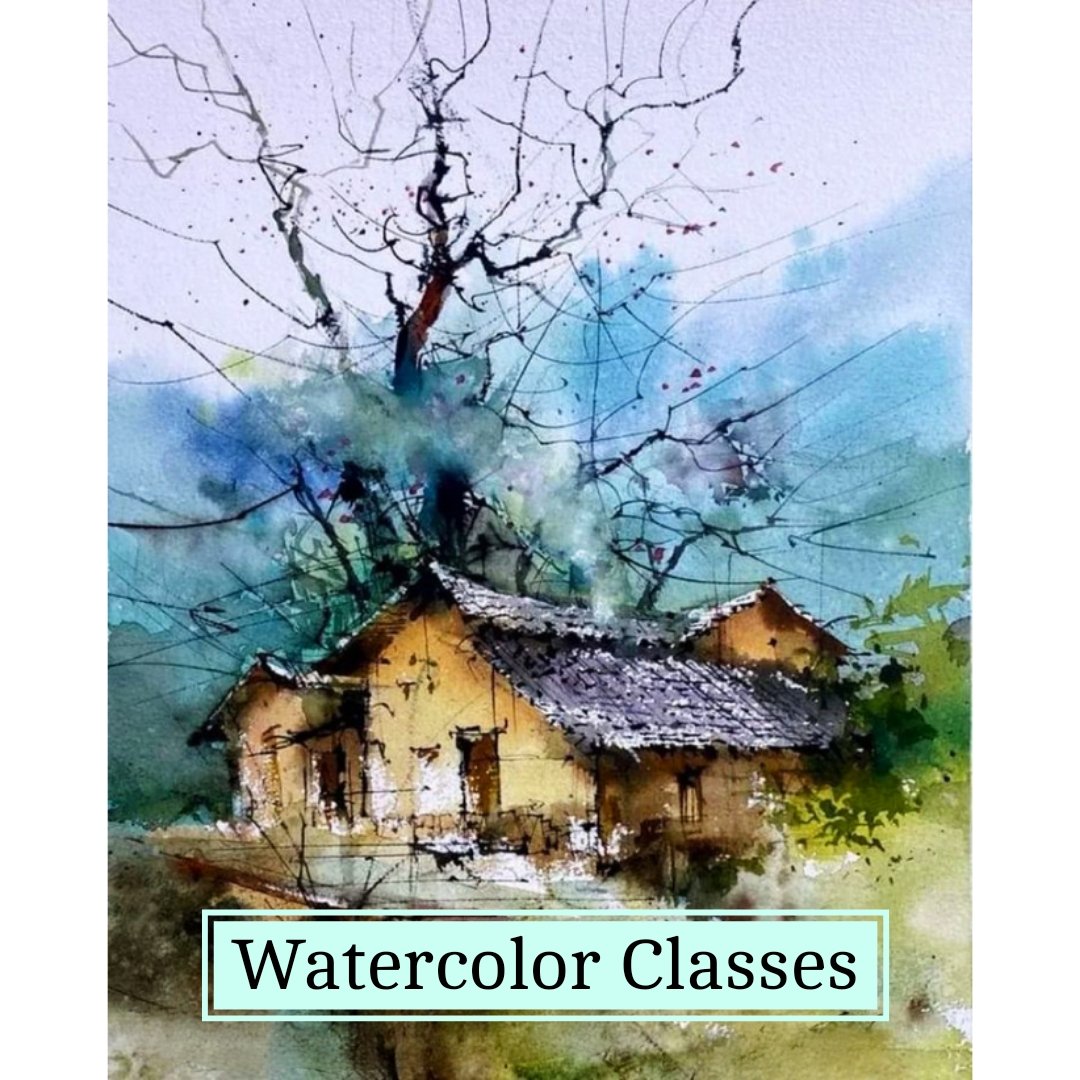
Watercolour Painting Classes The term watercolour comes from the Latin diminutive for “water” and refers to a painting technique where pigments are mixed with a water-based solution to create colour. In this art form, high-quality powdered pigments are blended with gum arabic and glycerin — the gum arabic binds the pigments together, while glycerin prevents the colours from hardening too quickly. In our Watercolour Painting Classes, students will explore the beauty of this delicate and fluid medium, learning how to control transparency, create soft blends, and achieve vibrant layers. From basic washes to intricate detailing, our step-by-step guidance ensures you gain the skills and confidence to express your creativity on paper. 1.Learn the science and art behind watercolours 2.Techniques for blending, layering, and washes 3.Understanding colour mixing and composition 4.Suitable for beginners and advanced learners 5.Create landscapes, florals, still life, and more
Sketching classes
✏️ Sketching Class – Where Imagination Begins Discover the art of sketching and bring your ideas to life with pencil and paper. Our Sketching Class is designed for beginners as well as aspiring artists who want to build a strong foundation in drawing. In this course, students will learn: Basic to advanced sketching techniques Line drawing, shading, and proportion Object drawing, nature sketching, and portrait basics How to observe and draw with confidence Sketching is not just drawing — it is the language of creativity. This class helps improve observation, concentration, and artistic expression while building a solid base for painting and other art forms. Whether you are a student, hobbyist, or future artist, this class will guide you step by step to draw with skill and confidence. ✨ Start your artistic journey with sketching – the first step to becoming a true artist.
Pot Painting Classes
A Journey Through History, Culture and Creativity Pot Painting, also known as Pot Printing or Traditional Pot Art, is one of the most beautiful and ancient forms of Indian folk art. Its roots go back hundreds of years, deeply connected with the rural life, culture, and storytelling traditions of India, especially in Bengal and other eastern regions. Originally, this art form evolved from Patachitra (Scroll Painting), where artists, known as Patuas, used to paint stories on cloth or handmade paper and travel from village to village narrating mythological and social stories through their paintings. Over time, this storytelling art found a new canvas — clay pots, vases, earthen vessels, and decorative items — giving birth to what we now lovingly call Pot Painting or Pot Printing.
Oil painting classes
Oil painting is not just a way of making pictures; it is a timeless form of art that carries history, emotion, patience, and imagination together on a canvas. Long ago, people used to draw on walls, rocks, and wood using natural colors. Slowly, artists discovered that when color is mixed with oil, it becomes richer, smoother, brighter, and lasts much longer. This discovery gave birth to what we now call oil painting. According to history, the earliest use of oil-based colors can be found around the 7th century in the Bamiyan caves of Afghanistan. However, oil painting truly developed and became famous in Europe during the 14th and 15th centuries. The great artist Jan van Eyck played a very important role in improving and popularizing this technique. Later, during the Renaissance period, legendary artists such as Leonardo da Vinci, Michelangelo, and Raphael took oil painting to an entirely new level. World-famous masterpieces like Mona Lisa were created using this medium. One of the greatest strengths of oil painting is that the colors dry very slowly. Because of this, an artist can carefully blend colors, create soft transitions, and add depth, light, and shadow with great realism. This is why oil painting is considered the best medium for realistic and lifelike artworks. Expressions on faces, light in the sky, reflections on water, and fine details can be shown beautifully with oil colors. Oil paint is made by mixing color pigments with special oils, most commonly linseed oil. This oil makes the paint smooth, rich, and long-lasting. Because of this quality, many oil paintings remain fresh and beautiful for hundreds of years. Even today, we can see oil paintings that are 200 to 500 years old preserved in museums. In India, oil painting also has a glorious history. The great artist Raja Ravi Varma made oil painting very popular by painting Indian mythological and historical characters in a realistic and powerful style. His works are still considered priceless treasures of Indian art. Oil painting is not a fast or easy process. It requires patience, skill, and deep concentration. A single painting may take many days, weeks, or even months to complete, with several layers of color. But once finished, an oil painting becomes something that can touch hearts and remain alive for generations. That is why oil painting is often called “The King of Painting Mediums.” It is not just a picture—it is a permanent expression of history, emotion, and the artist’s soul.
Charcoal classes
Charcoal Drawing and Painting: The Foundation of Realistic Art Charcoal drawing is one of the oldest and most respected forms of visual art. It is widely recognized as a fundamental medium for developing artistic skills, particularly in observation, shading, proportion, and realistic representation. For centuries, artists have used charcoal to create expressive sketches, detailed studies, and highly realistic artworks. Charcoal is made from carefully burned organic materials, usually wood, and is available in various forms, including vine charcoal, compressed charcoal, charcoal pencils, and charcoal powder. Each type offers unique qualities that allow artists to create a wide range of tones, textures, and effects. One of the most distinctive characteristics of charcoal is its ability to produce rich dark values and smooth tonal transitions. Unlike many drawing materials, charcoal enables artists to achieve a complete value range—from deep blacks to subtle light grays—making it an ideal medium for studying light, shadow, and form. The foundation of charcoal art lies in understanding values rather than color. Artists learn to observe how light falls on an object, identify the darkest shadows and brightest highlights, and recreate these relationships through careful shading techniques. This process develops a strong understanding of three-dimensional form, depth, and realism. A charcoal drawing typically begins with a light sketch that establishes the basic structure, proportions, and composition of the subject. Artists then gradually build darker values, refine details, and blend tones to create realistic transitions between light and shadow. Highlights are often created by preserving the white surface of the paper or lifting charcoal with an eraser. Charcoal is particularly effective for portrait drawing, figure studies, still-life compositions, landscapes, and academic art training. Because it emphasizes observation and tonal accuracy, it is often considered one of the best mediums for building a strong artistic foundation. What Students Learn in a Charcoal Drawing Course • Understanding different types of charcoal and their uses. • Observation and drawing techniques. • Proportion, measurement, and structural drawing. • Light, shadow, and value analysis. • Tonal rendering and realistic shading methods. • Blending and texture-creation techniques. • Portrait, still-life, and landscape drawing. • Creating depth, volume, and three-dimensional effects. • Composition and visual balance. • Professional presentation and preservation of charcoal artwork. Charcoal drawing is more than a technique; it is a discipline that trains the artist's eye to see accurately and interpret reality with confidence. Through consistent practice, artists develop stronger observational skills, better control over values, and a deeper understanding of form and structure. For this reason, charcoal is often regarded as the foundation of fine art education. Whether an artist wishes to pursue drawing, painting, portraiture, or any other visual art form, mastering charcoal provides the essential skills needed to create powerful and realistic works of art.
Advance oil pastel classes
Advanced Oil Pastel Painting Advanced Oil Pastel Painting is a modern and highly realistic art technique that focuses on the skillful use of light and shadow, color layering, and gradual color blending to create artworks that closely resemble real-life photographs. At the heart of this technique lies the “Dark to Light” approach. The process begins with the darkest areas of the subject and gradually progresses toward lighter tones. By carefully blending each color with progressively lighter shades, artists are able to build depth, dimension, and realism within their artwork. Layering plays a vital role in Advanced Oil Pastel Painting. Multiple layers of color are applied and blended seamlessly to achieve smooth transitions, rich textures, and intricate details. This method allows artists to capture the subtle effects of light, shadow, and surface characteristics with remarkable accuracy. Whether working from life, still-life arrangements, natural subjects, or reference photographs, careful observation is essential. During the initial sketching stage, artists must accurately identify and map the darkest and lightest areas of the subject. This strong foundation guides every subsequent layer of color and contributes significantly to the final realistic outcome. What You Will Learn • Understanding and analyzing light and shadow effectively. • Mastering the Dark-to-Light painting technique. • Creating and controlling multiple color layers. • Advanced color blending and mixing methods. • Developing realistic textures and fine details. • Drawing and painting from live subjects and reference images. • Creating depth, volume, and three-dimensional effects. • Producing professional-quality oil pastel artworks with a photorealistic appearance. This course is more than just learning how to use colors. It helps artists develop observation skills, patience, creativity, and a deeper understanding of visual realism. Through systematic practice and professional techniques, students gain the confidence to create stunning artworks that reflect the beauty and complexity of the real world. Advanced Oil Pastel Painting represents a contemporary artistic approach that combines traditional drawing skills with modern realism, enabling artists to elevate their work to a professional level.Tagline (Optional): "Transform Colors into Reality — Master the Art of Advanced Oil Pastel Painting."
Acrylic painting classes
Acrylic Painting: A Modern and Versatile Art Medium Acrylic paint is one of the most popular and widely used painting mediums in contemporary art. It is made from pigments suspended in an acrylic polymer emulsion, which gives the paint its unique characteristics and versatility. One of the most important features of acrylic paint is that it is water-soluble when wet but becomes water-resistant once it dries. This property makes acrylic paintings durable, long-lasting, and suitable for a wide variety of artistic applications. Because of its permanence and strength, acrylic paint has become a preferred medium for both professional artists and beginners. Acrylic paint is known for its fast-drying nature. Unlike oil paint, which may take days or even weeks to dry completely, acrylic paint can dry within minutes or hours, depending on the thickness of the application and environmental conditions. This allows artists to work more efficiently, apply multiple layers in a shorter period, and make adjustments quickly during the painting process. One of the greatest advantages of acrylic paint is its versatility. It can be used to create realistic paintings, portraits, landscapes, still-life compositions, abstract artworks, contemporary art, and decorative paintings. Acrylic paint can be applied to various surfaces, including canvas, paper, wood, fabric, and board. However, canvas remains the most popular surface for professional acrylic painting. Many artists consider acrylic paint to be a modern alternative to oil paint. It can produce rich colors, strong contrasts, and impressive visual depth while requiring less maintenance and drying time. Additionally, acrylic paint does not require strong solvents for cleaning, making it a more convenient and accessible medium for artists of all levels. In professional painting, understanding light and shadow is essential. Acrylic painting often follows a structured approach in which artists establish the darker values first and gradually build toward lighter values. This "Dark-to-Light" method helps create depth, form, volume, and a realistic three-dimensional appearance within the artwork. Layering is another fundamental technique in acrylic painting. Because acrylic paint dries quickly, artists can apply multiple layers without disturbing previous ones. Through careful layering and blending, it becomes possible to create smooth transitions, realistic textures, atmospheric effects, and intricate details that enhance the overall quality of the painting. Successful acrylic painting also depends on observation and visual analysis. Whether working from life, a reference photograph, or imagination, artists must carefully study the subject's shapes, colors, values, textures, and lighting conditions. A strong understanding of these elements helps transform a simple painting into a convincing and expressive work of art. What Students Learn in an Acrylic Painting Course • Understanding the properties and behavior of acrylic paint. • Color theory and effective color mixing techniques. • Light, shadow, and value relationships in painting. • The Dark-to-Light painting process. • Layering and blending techniques for realistic results. • Texture creation and surface effects. • Landscape, portrait, still-life, and contemporary painting methods. • Composition, perspective, and visual balance. • Professional canvas preparation and finishing techniques. • Creating exhibition-quality and marketable artworks. Acrylic painting is more than simply applying color to a surface. It is a creative process that develops observation, patience, technical skill, and artistic expression. Through consistent practice and a solid understanding of painting principles, artists can create works that are both visually compelling and technically accomplished. Today, acrylic paint is recognized as one of the most important mediums in contemporary fine art. Its flexibility, durability, vibrant color range, and ease of use make it an excellent choice for artists seeking both creative freedom and professional results.Professional Tagline: "Master Acrylic Painting — Transform Observation, Color, Light, and Creativity into Professional Works of Art."
Close